Soledad Zarka & Loup Uberto
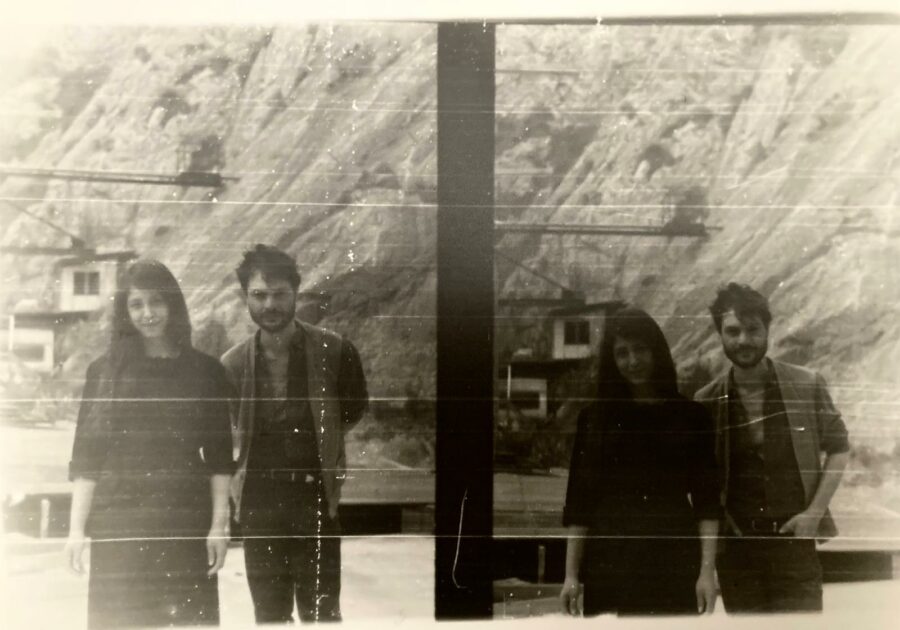
“Soledad approaches everyday gestures and objects as vessels of a collective, silent memory.
In the streets, in the thresholds of cities, she presents aporetic fables to passersby—images that appear banal at first, and soon become deeply moving, disturbingly familiar, suspended like that, on the edge of representation. By considering the familiar object and the everyday gesture as two facets of a single experience, she reveals their symmetry: the object is the extension, the appendage of the gesture—and vice versa.
When the gesture sets the object in motion, the object reveals what the gesture alone cannot express, while at that same moment, the gesture renders visible what the inanimate object could never disclose. Thus, the dancing body becomes a stage where gesture and object coincide. The body is the organ of what is danced. In the same way, the body can be the organ of what is sung, with the voice as its appendage…
Likewise, I want to bring singing closer to increasingly stripped-down forms, removed from the concert format—to use the concert as a tool of sabotage which, turned back on itself, should break the illusion of a boundary between the time of performance and that of daily life. To give the act of singing the same status as seeing, sleeping, drinking, or preparing a good meal… and then to determine what, in the everyday, must necessarily distinguish what is sung from other gestures.
As a duo, we are sketching out a kind of archaeology of laborious gesture. Just as work songs support the act of labor, we search for gestures that support the singing body—and likewise, for songs that support the dancing body. In essence, we are conducting a physiological study of the sung, with gesture as a measuring tool, and an acoustic study of the danced, with the voice as the instrument of measurement.
By fictionalizing (from fingere – to imagine, to shape) these gestures and these voices, we seek to manipulate “unnameable” images—where the gesture seems linked to an everyday situation, yet the situation remains elusive, like in cognitive shock experiences, where the subject feels a strange sense of familiarity while looking at an object they recognize but can no longer name, nor identify its function…”
Lu
events